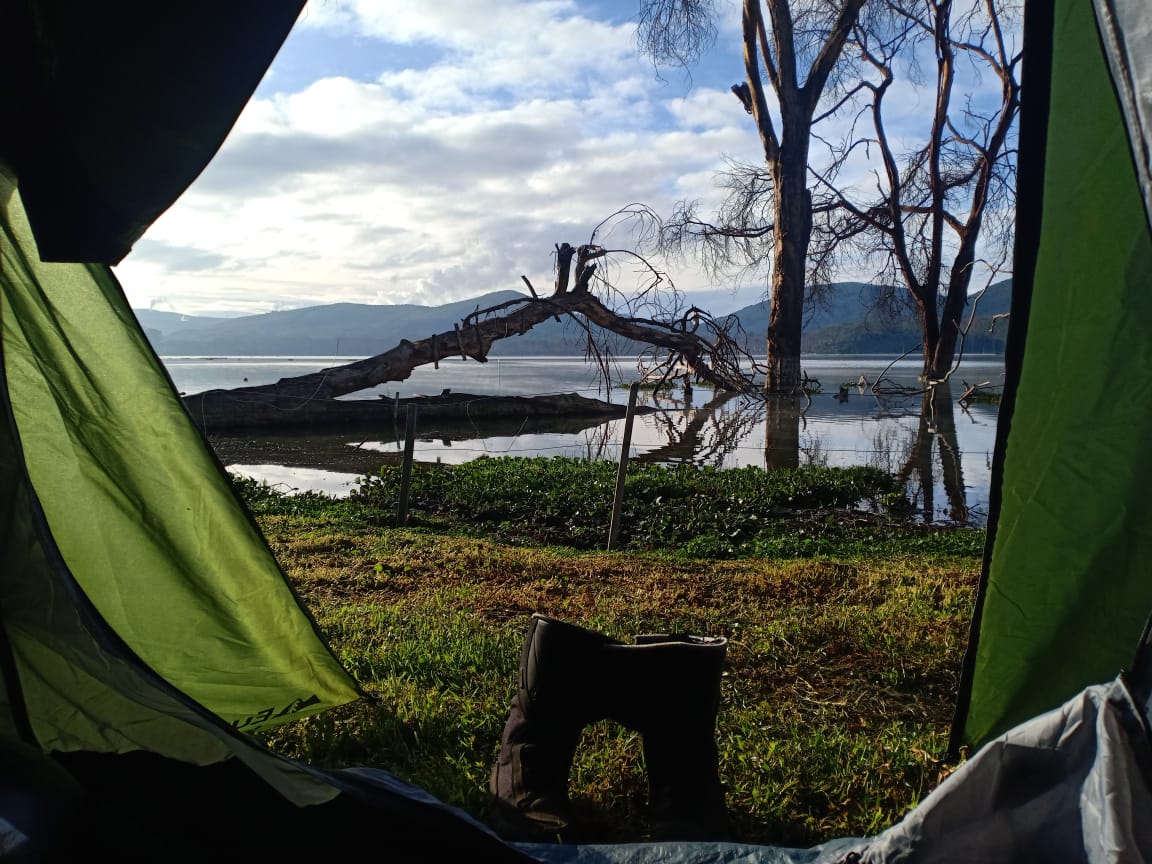
I fell in love with camping young – and never looked back. I’ve been pitching tents since I was about nine. Trading walls for wild places and the freedom of making do with what I carry.
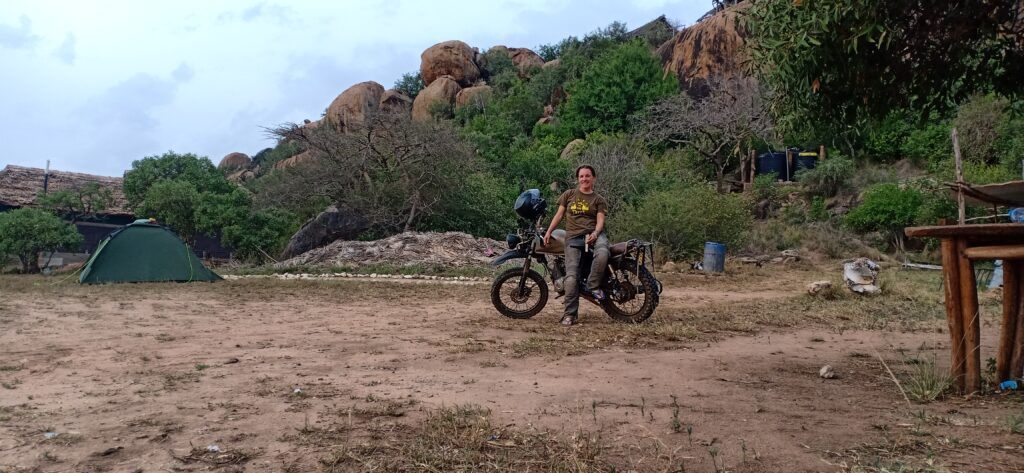
Sure, there are great guesthouse-to-guesthouse routes, and campgrounds with tents or cottages. But my own tent has fewer bugs, my mattress beats most guesthouse beds, and I can go truly remote, always ready if the road throws a surprise. I’ve camped all over Kenya (from church compounds to literal roadsides) and even hauled my kit by bike to Botswana.
People joke that camping is an expensive way to look homeless. Maybe at first. But in the long run, it’s cheaper than rooms and restaurants – and far more rewarding.
A few of you have asked me for my packing list for motorbike or car camping trips. So here you go!
The items are grouped under 5 headlines. Some of the mentioned items will apply more to a car than bike trip based on volume. And much will depend on your route and personal preference.
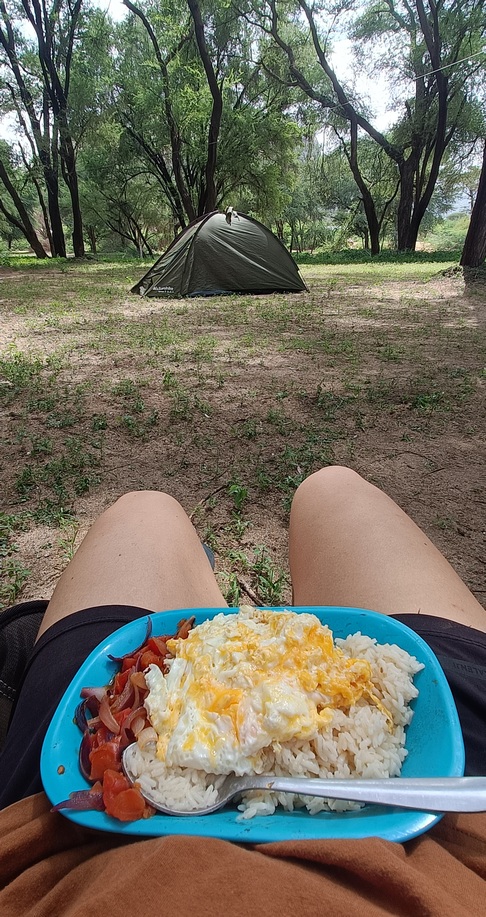
(1) Food & Cooking
First question, what will you eat? 3 options: rely on restaurants/locals, eat cold/ready foods, or actually prepare hot meals.
Second question, what kitchen equipment is available where you’ll be? (three stones and fire also counts)
Third question, what supplies can you keep stocking up as you go and what needs to be carried from home/civilization?
Ziplock bags or airtight containers can help prevent luggage disasters:
- Drinking Water: Often, you end up buying dozens of plastic bottles – on a trip where you wish to connect with nature. On the bike, depending how remote things get, I carry a small portable water filter (Katadyn). Also, 2 liter emergency water is key in case of remote breakdowns. When traveling with the car, I carry a big 10 litre container from home. I also carry about 10l tap water that I keep refilling (car issues, first aid, dishwashing, handwash, etc)
- Food I found good to carry (some need cooking, some are ready to eat): Canned tuna, canned githeri, tomato paste, canned pinapple, pasta, rice, lentils, musli, tea/coffee, sugar, milk in 250ml boxes, dried sausages/meat, eggs (car).
- Oil (in a screwtop plastic container), spices, onions, garlic. (makes even canned githeri delicious!)
- Pot, pan, lid, a knife. (Optional: Cooking spoon)
- A few spoons, forks, plastic/emaille cups, melamine/plastic plates (not too flat), small bowls. I usually just carry stuff from my kitchen. Not a big fan of single-use plastic.
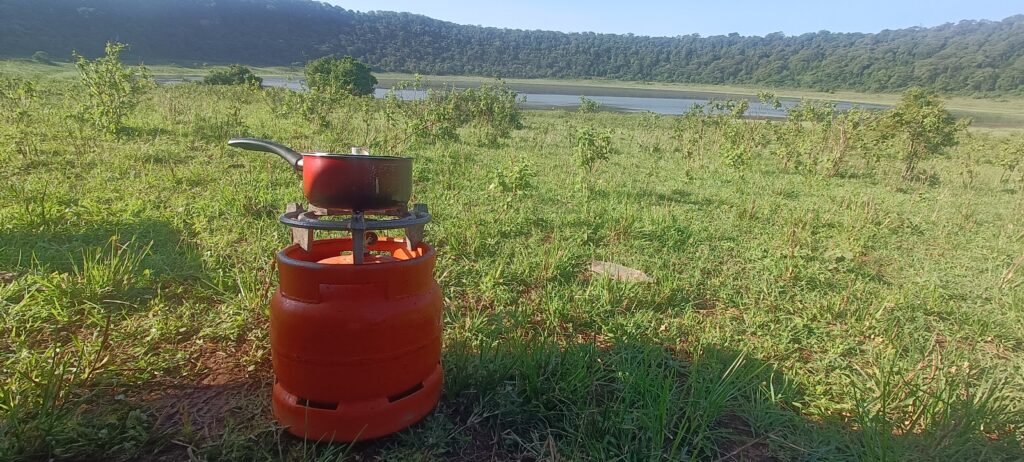
- Optional: Gas cooker (ideal for car) or mini gas or kerosine stove (for bike). You could also rely on bonfire or campsite kitchen.
- Matchbox or lighter. Dishwashing bar/liquid and sponge. Kitchen towel for wiping hands. Some garbage bags.
- Snacks: Juice boxes, peanuts/almonds, dried fruit, musli or protein bars.
- Frozen sausages or meat usually thaw by evening and hence should be prepared (thoroughly) on the day of purchase.
(2) Camping
Here the climate plays a key role. (a) What will the night temperatures be? (b) chances of rain?
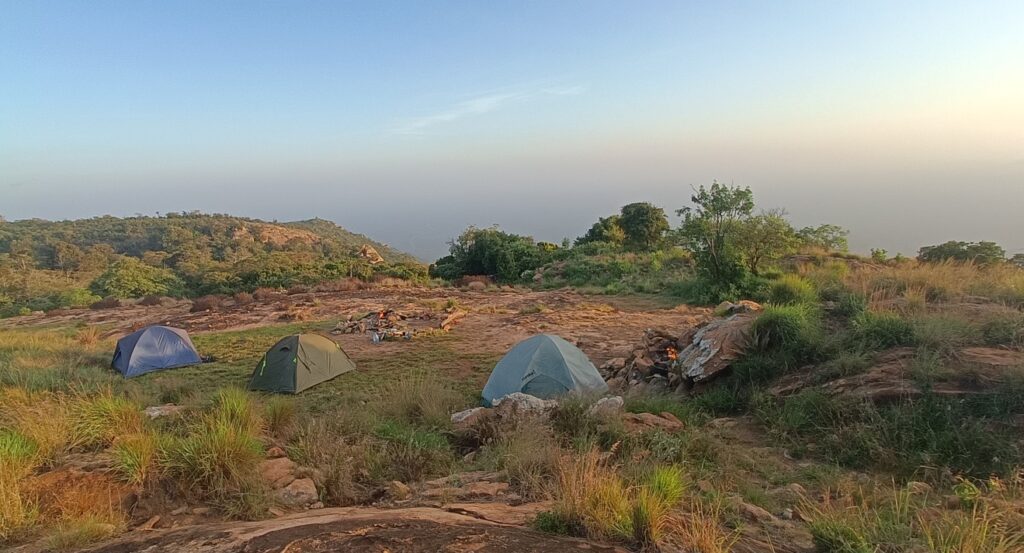
- Tent with all its sticks and pegs.
- Mattress (+pump).
- Kikoy/sheet for under, blanket or sleeping bag according to climate. Hot water bottle for really cold places.
- Nice to have: headlamp, camping stool/chair.
- Tissue Paper. Consider something to pee into at night if you’re in hyena territory. (Depending on toilet accesss: Spade for digging holes for number 2s.)
- Optional: Hammer, pillow (inflatable or the real deal). Solar light (+panel for longer trips)
(3) Car/Bike needs
Obviously, they must be serviced and vital things working well (oil level, coolant level, tires holding air, brake pads, …)
- Fuel range and budget calculated. Petrol stations along route researched.
- Tools, some zipties, electric tape, …
- For car: Spare tire (check pressure), tire jack, tools.
- For bike: Puncture Kit.
- You might find someone who knows how to help you, if you have the tools. (even YouTube)
(4) Medical
You are going into nature, where plants and animals live. And where it’s hot and dry and/or maybe unexpectedly cold and wet.
- First aid kit. Knowledge how to use it.
- Oral Rehydration Salt sachets.
- Mosquito repellant.
- Long pants that can be tucked into your socks. 🐜🐜🐜
- Closed shoes (reduces risks related to thorns, snakes, scorpions and their friends)
- Sunscreen.
- Basic meds as per discussion with your doc/pharmacist: antihistamine creme, painkiller, an anti-inflamatory and broadband antibiotic. Any other personal meds.
- EpiPen in case you have any reason to believe you might need it.
- In the same breath: Do not wear/carry perfume or scented lotions. 🐝🐝🐝 Leave people at home who insist on using them. (Not kidding)
- Emergency contacts briefed. Health insurance updated and call numbers saved. Closest hospitals researched.
(5) Personal needs
This comes last because by now your space will be limited.
- Charging cables (phone, camera, etc). Powerbank. Ideally a bike/car charger.
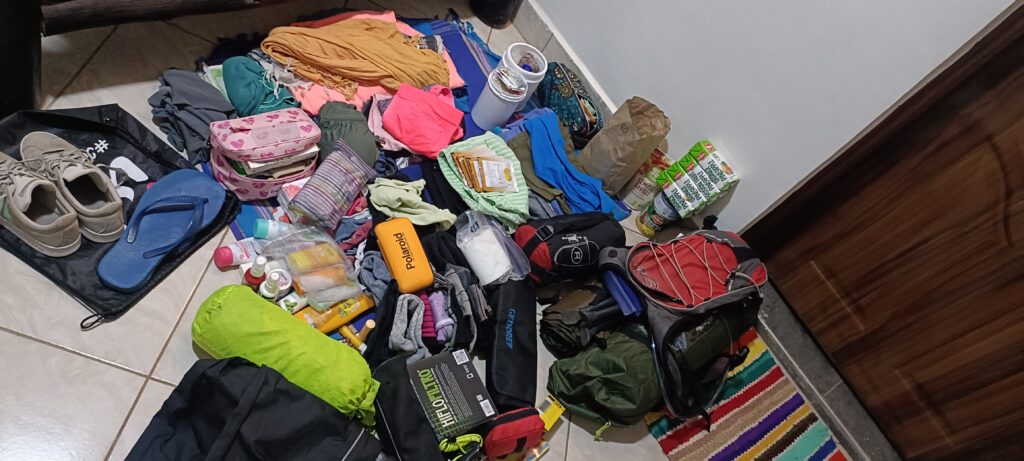
- Clothes (layers, from hot to cold). I like arranging them in smaller bags (red = new clothes, black = dirty clothes, …).
- Your toiletries. (Again, no perfumes or scented lotions!)
- Menstrual items. (sometimes travel changes the cycle)
- Sunglasses. (Contact lenses. Glasses.)
- Laundry soap, a few pegs.
- Towel. Slippers for shower.
- Gear for planned activities: Swim suit, camelbak and shoes for walks, sports bra, …
- Optional: Camera, binocular.
- Optional: Fun stuff (books, card games, diary, arts stuff, …).
- Trip budget completed. 20% emergency cash.
Haha, this list looks long. I usually arrange everything, then see how to pack it in a way that I find things on the road. (Car: boxes, bags. Bike: smaller bags in the big bag)
What did I forget to mention?
Happy to hear your comments!